
Keynote Speakers
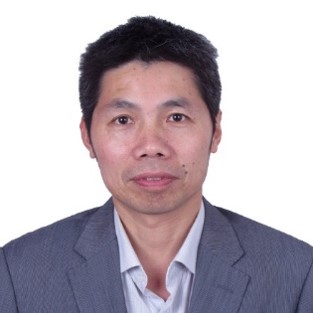
Prof. Mengxiang Fang
College of Energy Engineering, Zhejiang University, ChinaSpeech Title: CO2 Chemical Absorption Technology Development and Industrialization
Abstract: CCUS is one of the potential ways to control CO2 from fossil fuel utilization. CO2 Chemical absorption technology is regarded as one of the most promising technologies for CO2 capture. Chemical absorption solvents are the key technologies of the system. Solvent screening, performance tests, and degradation properties were introduced. Hybrid chemical absorbents, which involve blending two or more chemical absorbents to leverage the characteristics and performance of each, have been studied and evaluated. Several advanced solvents such as biphasic solvents and water-lean solvents have attracted considerable attention due to their lower operating temperature, energy savings, and higher cyclic capacity. However, the high viscosity and emissions of the new solvents, which affect their utilization, have been addressed. This report will give an overview of solvent selection and management. The presentation will also introduce new PP packing material development and high-efficiency plate heat exchanger research. With regard to the energy-saving process, the study focuses on the interstage cooling, staged flow process and MVR process. A 150 kt/y post-combustion carbon dioxide capture demonstration project of a coal-fired power plant was designed and erected at Guoneng Jinjie Power Plant of China, which adopted advanced mixed amine absorbent, high-efficiency plate heat exchanger and plastic packing, coupled with the energy-saving process "interstage cooling + MVR + staged flow". The measurement results showed that the carbon dioxide capture rate exceeded 90% and the purity of carbon dioxide after capture reached 99.5%. The minimum regeneration energy consumption after comprehensive optimization was 2.3–2.4 GJ/t CO2. Economic analysis showed the CO2 capture operation price attained US$ 30/t CO2. The project will supply a promising solution for the coal-fired power plant to realize low CO2 emission.
Biography: Prof. Mengxiang Fang studied at the Department of Engineering Thermal Physics of Zhejiang University from 1981 to 1991 and received his PhD degree in December 1991. He has worked at the Energy Engineering Department of Zhejiang University as a lecturer, associate professor, and full professor since 1991. He is now the Director of Qingshanhu Energy Research Center of Zhejiang University. He has focused on research in CO2 capture technology for more than 30 years. His research covers mixed amine, biphasic solvents, water-lean solvents, ionic liquids, solid acid catalysts, solvent degradation and HSS removal, plastic packing, high-efficiency heat exchangers, and new energy-saving processes. He has been responsible for completing more than 40 projects, including three National Natural Science Foundation projects, the National Key Basic Research Project (973), the National High Technology Research and Development Project (863), an EU cooperation project, and China international cooperation projects. He also participated in the 150 kt/y CO2 capture project at Jinjie Power Plant as the technology lead, the 15 kt/y CO2 capture project at Lanxi Power Plant, and the 500 kt/y CO2 capture project at Taizhou Power Plant. He holds more than 20 patents and has presented more than 300 papers in journals and conferences. He has received many awards from the government and associations.
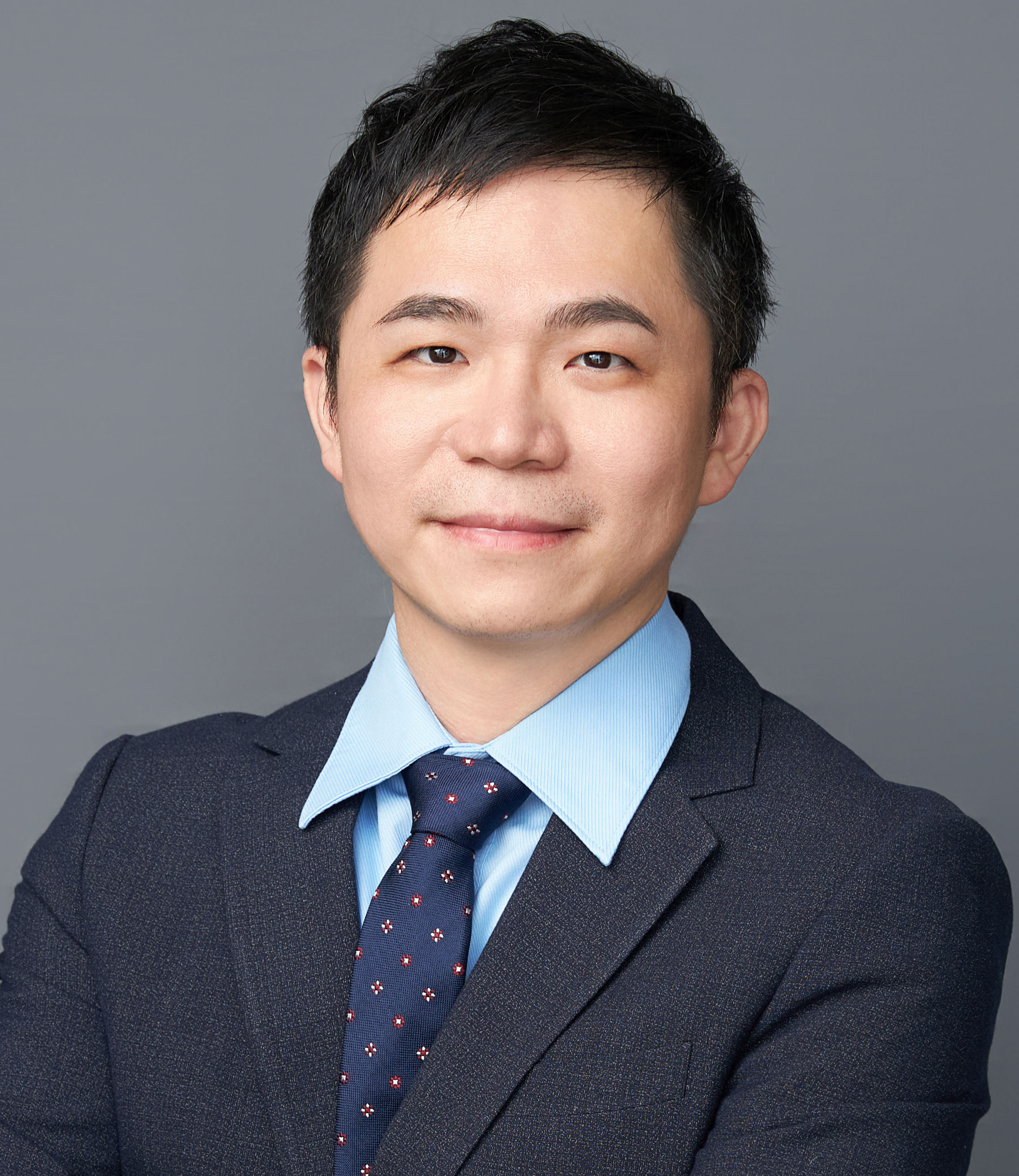
Prof. Hsing-Yu Tuan
Department of Chemical Engineering, National Tsing Hua University, TaiwanSpeech Title: Redefining Electrode Materials: From Conceptual Design to High-Performance Battery Realization
Abstract: To address the urgent demand for advanced energy storage systems, this study integrates three major strategies for next-generation potassium-ion batteries (PIBs), with a focus on the design of high-performance electrode materials. Our approach centers on: (1) optimizing anode materials via nanostructuring, interface engineering, multi-element alloying, and catalytic enhancement to improve electrochemical performance and cycle life; and (2) developing high volumetric energy density systems through high-mass-loading electrodes and high-entropy cathodes to meet practical application needs. The optimization of electrode materials is carried out through five key directions:
(a) Heterostructured electrodes are developed to enhance ion/electron transport and modulate electronic properties such as Fermi level, bandgap, and charge separation via engineered interfaces. Tailored synthesis strategies and control over spatial arrangement improve interfacial effects and electrochemical output.
(b) High-entropy electrodes exploit the entropy-stabilized structure and lattice distortions to minimize volume changes during cycling, thus improving capacity retention and addressing issues of power density and elemental dependency.
(c) Tunable solid-solution electrodes utilize synergistic effects between bimetallic components to boost electrochemical active sites. Substituting sulfur with Se or Te enhances charge transfer and ion diffusion due to their larger atomic size and lower electronegativity, while improving conductivity.
(d) Electrochemically reconstructed electrodes involve phase or structure evolution during cycling, including conversion, alloying, and intercalation reactions. These changes lead to adaptive structure optimization, enabling high capacity and prolonged cycling.
(e) Single-atom catalytic electrodes feature atomically dispersed metal sites with low coordination environments, promoting fast redox kinetics and improved rate capabilities. Strong bonding between single atoms and supports enhances charge transfer and reaction efficiency.
Collectively, these strategies aim to unlock the full potential of potassium-ion storage technologies by enabling high energy, long life, and sustainable electrode design.
Biography: Prof. Tuan is a Distinguished Professor in the Department of Chemical Engineering at National Tsing Hua University, Taiwan. His research focuses on the synthesis of advanced nanomaterials and their applications in energy storage and conversion, with particular emphasis on translating fundamental materials research toward practical applications. He has published more than 130 papers in leading international journals, including Energy & Environmental Science, Journal of the American Chemical Society, Advanced Science, ACS Nano, Chemical Engineering Journal, Energy Storage Materials, Nano Energy, and Journal of Materials Chemistry A. His publications have received more than 12,000 citations, and seven of his papers have been recognized as Highly Cited Papers by Clarivate. He also holds 10 patents. His research has made significant contributions to the development of advanced battery materials and related energy technologies.
Prof. Tuan has received numerous prestigious national and international honors. These include the Outstanding Asian Researcher and Engineer Award from the Society of Chemical Engineers, Japan (SCEJ), as well as election as a Fellow of the Royal Society of Chemistry (RSC), the Institute of Materials, Minerals and Mining (IOM3), the Institute of Physics (IOP), the International Association of Advanced Materials (IAAM), the Australian Institute of Energy (AIE), and the Vebleo International Scientific Organization, in recognition of his contributions to battery materials and technology. He has also received a number of major academic awards, among which the most notable include Taiwan’s Ministry of Science and Technology Outstanding Research Award, which he received twice, in 2020 and 2023; the Mr. Kai-Ying Jin Award, the Professor Mao Gao-Wen Award, and the Professor Tsai-Tzer Lai Award from the Taiwan Institute of Chemical Engineers (TwIChE); the IAAM Medal; and the IIP International Lifetime Achievement Award for Distinguished Inventors.
More Speakers will be updated…