
Call for Special Session Proposals
- A session title
- Aim and scope, including a list of key topics
- Names and affiliations of all organizers
- A short biography (100–150 words) for each organizer
- (Optional) A list of potential contributors
Proposals will be assessed based on the timeliness and originality of the topic and the qualifications of the proposers. All organizers must hold a PhD and have a strong publication record in the relevant field.
Acceptance decisions will be sent within two weeks of submission. Accepted sessions will be listed on the conference website.
To ensure thematic coherence, the organizing committee may merge similar proposals at its discretion.
Please submit your proposal by email to: nefes@intergridconf.org
Special Session on ‘Solid-State Batteries: Electrolytes, Interfaces and Practical Cell Engineering’
Aims of the Special Session
This special session will bring together researchers investigating solid electrolytes, electrode–electrolyte interfaces, and practical solid-state battery architectures. It will examine how electrolyte chemistry, ionic transport, interphase formation, and mechanical contact govern cell performance and durability.
Contributions are welcome on sulfide, oxide, halide, polymer, and composite electrolytes, together with interface engineering for lithium-metal and silicon anodes and composite cathodes. Particular attention will be given to solid-state lithium–sulfur batteries, including sulfur-conversion kinetics, catalyst–electrolyte compatibility, and the maintenance of ionic pathways during cycling.
The session will also cover operando characterization, multiscale modelling, and machine learning that connect materials properties with cell behaviour. To support meaningful comparisons and practical development, presentations are encouraged to discuss electrode loading, electrolyte content, operating pressure, temperature, and cell-level energy accounting. Scalable processing, safety, and materials sustainability will provide a link to the conference's emphasis on low-carbon energy applications.
The session aims to identify experimentally testable design principles and opportunities for collaboration across materials discovery, interface science, and battery manufacturing.
Topics of Interest (not limited to)
- Solid-electrolyte discovery, ionic conduction, and electrochemical compatibility.
- Lithium-metal and silicon interfaces, contact loss, and dendrite suppression.
- Solid-state lithium–sulfur cathodes, conversion catalysts, and protective coatings.
- Composite-electrode architecture, mechanical degradation, and operation at reduced pressure.
- Operando diagnostics, computational modelling, and machine-learning-guided design.
- Electrode processing, pouch-cell development, safety, cost, and recyclability.
Submission deadline
Full papers: May 31, 2027
Abstracts (without full paper publication): July 1, 2027
This special session is now open for submission and registration. Please submit your abstract or full paper via the Submission System and choose the option of “Special Session on Solid-State Batteries: Electrolytes, Interfaces and Practical Cell Engineering”. After that, you can make the conference registration directly via the Registration page or the conference secretary will contact you for further information.
Session Chair
Prof. Kwun Nam Hui, Ph.D., FRSC, FHEA, SMIEEEAssociate Professor, Institute of Applied Physics and Materials Engineering, University of Macau, Macao SAR, China
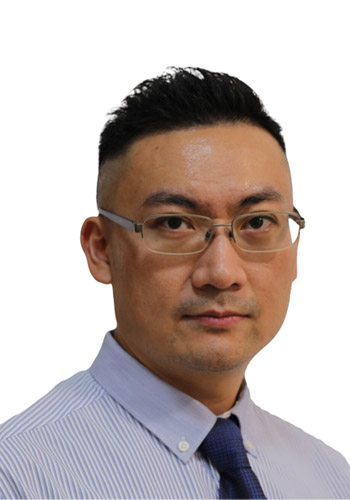
Prof. Kwun Nam Hui is an Associate Professor at the Institute of Applied Physics and Materials Engineering, University of Macau. He received his Ph.D. in Electrical and Electronic Engineering from the University of Hong Kong in 2009. His research focuses on electrochemical energy-storage materials, interfaces, devices, and data-driven materials discovery. He has authored more than 320 SCI-indexed publications, which have received over 18,400 citations.
His recent achievements include spin-state engineering of solid–solid sulfur redox reactions and the demonstration of a 13.2 Ah lithium–sulfur pouch cell with a specific energy of 435 Wh kg⁻¹. He is a Fellow of the Royal Society of Chemistry and a Senior Member of IEEE and has been included in the Stanford University/Elsevier list of the world’s top 2% scientists since 2021. In 2026, he was appointed an Academic Associate Editor of Rare Metals (Wiley). He also serves on the editorial boards of Scientific Reports (since 2025), Sustainable Chemistry for Energy Materials (since 2025), and Nanotechnology (since 2026).